
Earthquake Early Warning System for Enterprises
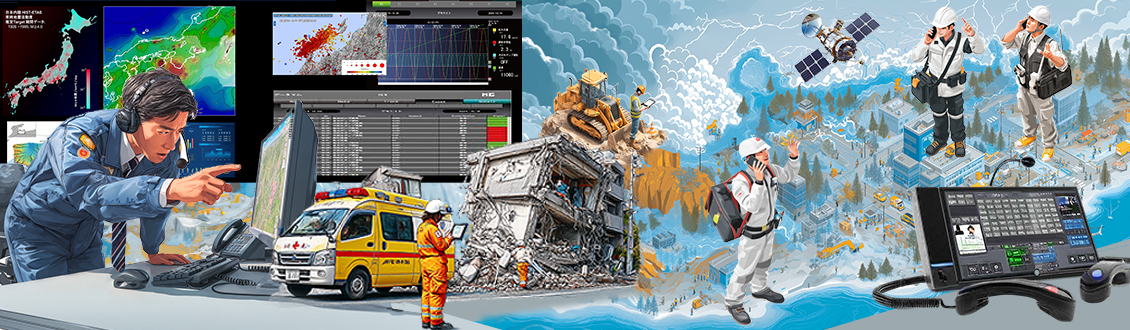
Earthquake Early Warning
Dedicated Earthquake Alerts for Specific Locations
The Japan Meteorological Agency (JMA) provides two types of Earthquake Early Warning (EEW) services.
General Public Alerts
Alerts distributed widely to the general public (such as those received on smartphones).

Advanced User Alerts
Alerts designed for specific locations, enabling advanced applications such as automated equipment control.

The Earthquake Early Warning service provided by SANGIKYO is based on the Advanced User Alert system, designed for people and facilities located at specific sites.
By prioritizing speed, the system notifies users of: predicted seismic intensity at the specified location, and estimated time remaining before shaking begins.
Services
SANGIKYO distributes and delivers Earthquake Early Warnings issued by the Japan Meteorological Agency to designated locations such as plants, factories, offices, schools, and hospitals.
In addition to displaying earthquake information on dedicated terminals, the system provides automated risk mitigation measures according to the alert level.
By integrating with other control systems, the system can automatically perform actions such as stopping elevators, halting factory equipment, and triggering evacuation alerts.
These functions help reduce both equipment damage and human injury during earthquakes.
In addition to displaying earthquake information on dedicated terminals, the system provides automated risk mitigation measures according to the alert level.
By integrating with other control systems, the system can automatically perform actions such as stopping elevators, halting factory equipment, and triggering evacuation alerts.
These functions help reduce both equipment damage and human injury during earthquakes.
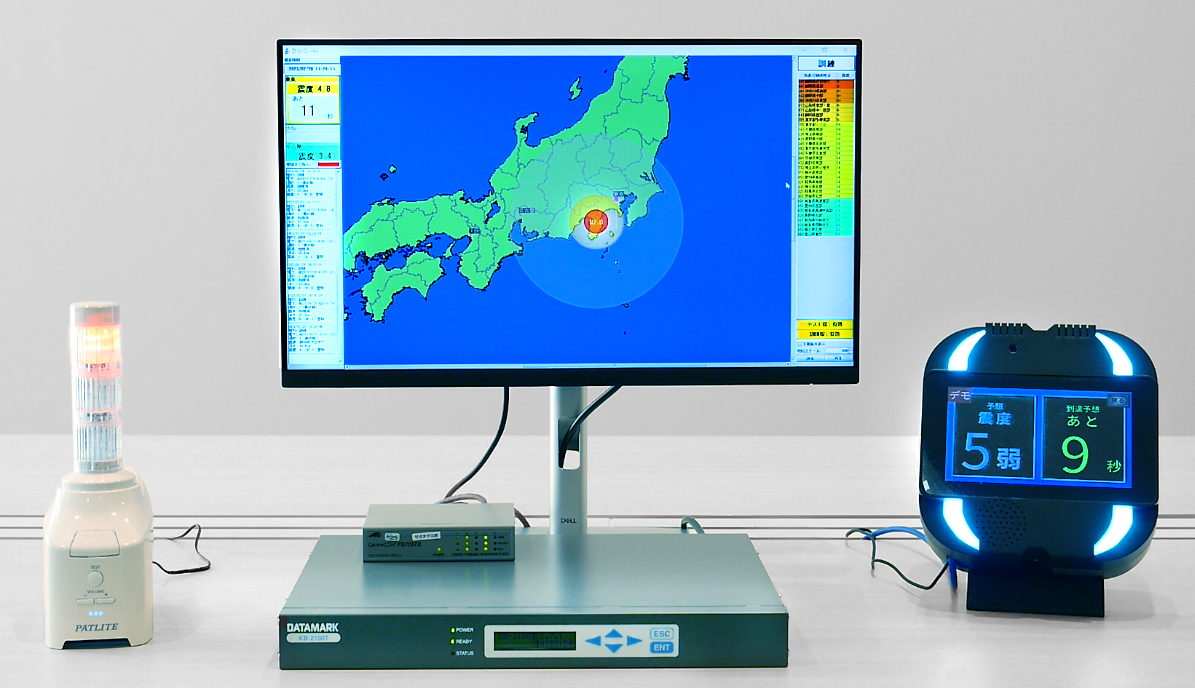
01 . Rapid Notification to Specific Locations
Based on Earthquake Early Warnings issued by the Japan Meteorological Agency:
- The system notifies designated locations of "predicted seismic intensity" and "estimated time remaining before the earthquake occurs."
- The first few seconds after detection can determine survival outcomes!
- By enabling immediate response before strong shaking begins, the system significantly reduces potential damage.
Ensuring safety of students and staff
Notifying occupants of the remaining time before shaking

Alerting large numbers of people simultaneously
Displaying warnings and activating emergency preparedness measures
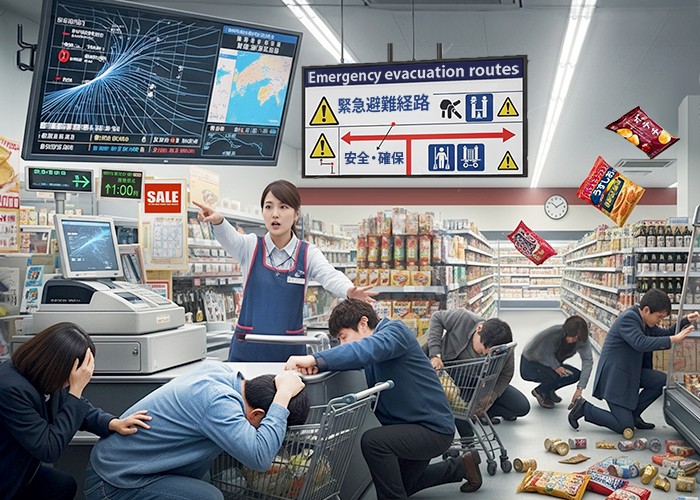
02 . Prevent Secondary Disasters with Automated Equipment Control
Prevent Elevator Entrapment
- By detecting earthquakes before strong shaking begins, elevators can automatically stop at the nearest floor, allowing occupants to exit safely without becoming trapped.
Prevent Fires from Industrial Equipment
- Early detection enables automatic shutdown of factory equipment and machinery, reducing the risk of fires or equipment damage caused by earthquakes.

Elevator control
(automatic stop)

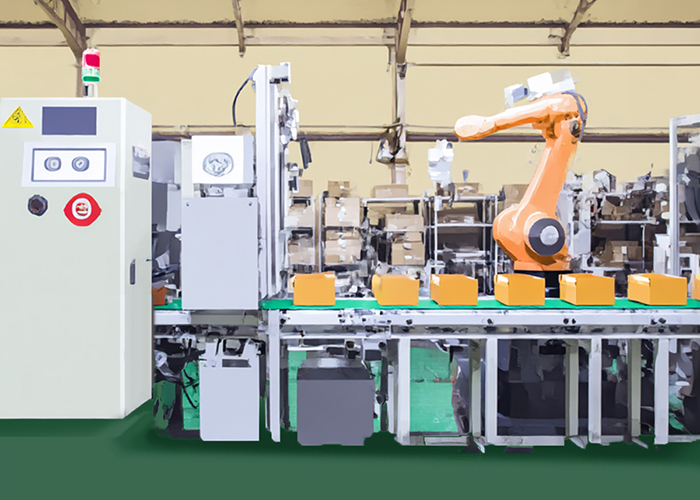
Factory and plant equipment control
(automatic stop)
Benefits of Implementing This System
- Provides peace of mind for employees as well as visitors and facility users
- Enables stable operations without disrupting production lines, even during emergencies
- Strengthens trust and reliability with business partners
Typical Implementation Locations
Factories / Underground shopping areas in major railway stations / Hotel chains / Banks / Apartment complexes / General hospitals / Professional training colleges
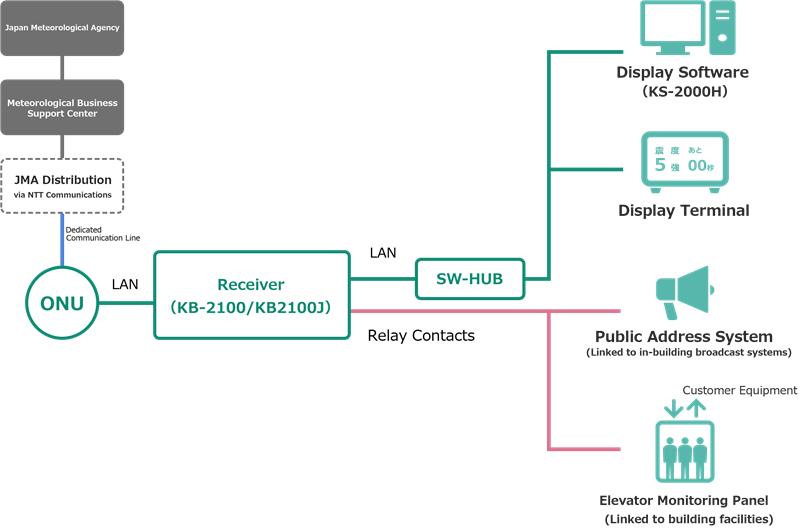
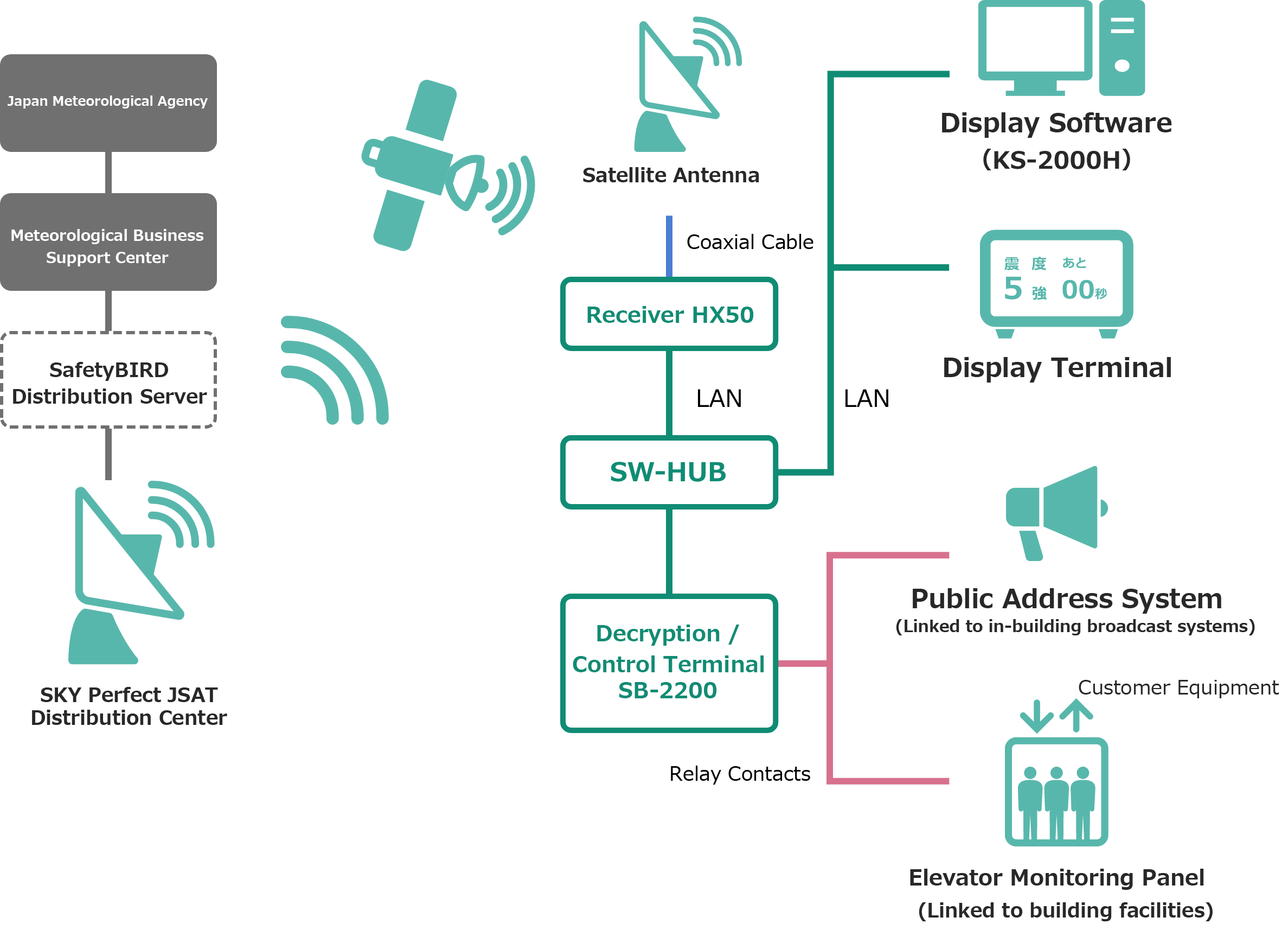
System Configuration Examples
SANGIKYO provides total support from proposal and system design to installation and maintenance.
Configuration Example 01
Terrestrial Network Type
Configuration Example 02
Satellite Network Type
Frequently Asked Questions
How are Earthquake Early Warnings delivered?
Alerts can be delivered through multiple channels including dedicated terminals, email notifications, and voice alerts.
Can the system be customized for enterprise use?
Yes. Alert distribution settings can be customized according to the requirements of each organization.
Will alerts still be delivered during communication failures?
Yes. The system uses redundant communication routes to ensure reliable alert delivery.